Remote work and employee engagement: Psychology of Connection, Motivation, and Performance
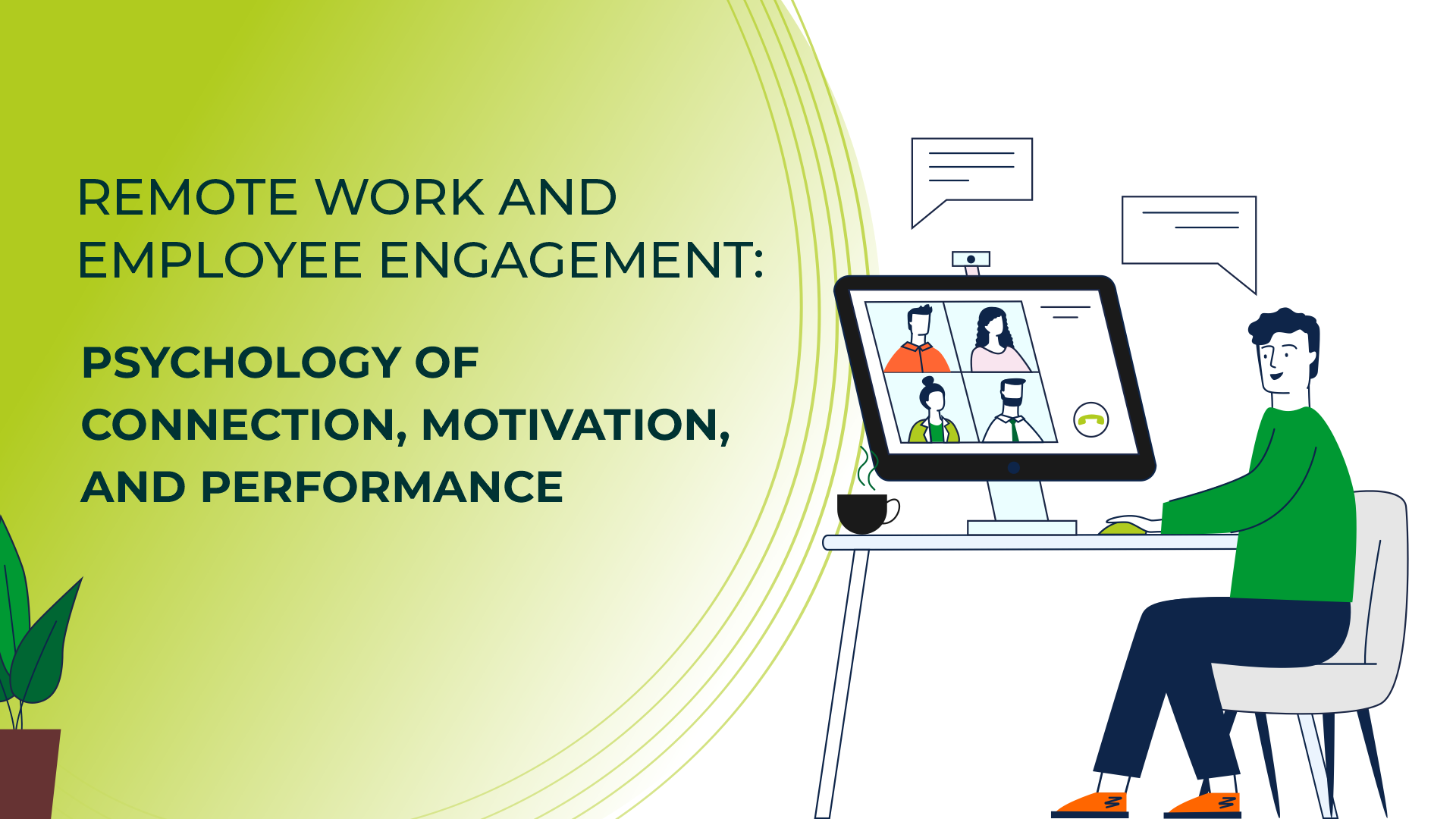
For many employees, remote work has reshaped how they experience their workday. When Arjun, a marketing professional, began working remotely, he noticed that he could structure his tasks more intentionally and manage his time in a way that suited his rhythm. He took short breaks when needed, stayed focused during key work hours, and ended his day feeling mentally present. What stood out to him was the sense of ownership he felt over his responsibilities. The flexibility did not change the nature of his work, but it influenced how he approached it. That feeling of autonomy and trust deepened his engagement.
Remote work, also referred to as technology mediated work or telework, involves carrying out job responsibilities outside the traditional office setting through digital technologies. Once considered a temporary solution, it is now recognised as a structural shift in how organisations operate. While some organizations have gone back to working onsite, most organizations have adopted hybrid working and quite a few have embraced remote only. This approach can provide employees with greater autonomy, flexibility, and control over how they manage their responsibilities, which can contribute to both personal development and organisational success.
Employee engagement is not merely about being physically present in the office; it is about being psychologically invested and emotionally committed to organisational goals, even when working away from a company location. It represents the state of mind in which a person feels happy, enthusiastic, and fully engaged in his or her work, resulting in better performance and loyalty to the organisation. When employees feel connected to their work and aligned with the company’s vision, they are more likely to go above and beyond in their daily tasks, leading to overall better business outcomes. The employee shows active engagement in tasks given to them, which leaves no room for isolation or feelings of loneliness which can hamper the effective and efficient working of an organisation. Employee engagement is, therefore, correlated with higher productivity, better talent retention, and more positively shaped company culture.
Understanding the intersection between Remote work & Employee engagement:
Remote work and employee engagement are intersected in meaningful ways because both ultimately shape the employee experience. Remote work depends on where the work is happening, but employee engagement depends on how employees think, feel, and behave while performing their work. Remote work and employee engagement intersect where changes in the work environment impact how connected, motivated, and committed employees feel toward their work and organization.
Remote work can increase flexibility and autonomy among the employees, which positively impacts employee engagement. There are also challenges which are faced during remote work settings such as reduced social interaction, communication barriers, work-life balance issues, which negatively impact employee engagement if not managed appropriately. Employee engagement is complex and conditional, not automatic. Employees need to work on their self-discipline and communication clarity in order to have virtual employee engagement in remote work settings. If these two elements are not managed effectively, employee engagement may suffer with remote work settings. Research clearly shows that remote work and employee engagement are interconnected. For instance, Fatima et al. (2024), found that remote work significantly influences employee engagement through factors such as communication, organizational support, and job satisfaction.
Psychological Drivers of Engagement in Remote Work:
Psychology is derived from the Greek word ‘Psyche’ which means ‘Soul’. It refers to the scientific study of human behaviour and mental processes. Understanding engagement in remote work requires examining the psychological processes that influence connection, motivation, and performance.
The Psychological drivers are intrinsic and extrinsic motivation, isolation, social interaction, burnout, particularly the core dimension of emotional exhaustion.
Intrinsic and Extrinsic Motivation
When motivation comes into picture, there are two types of motivation that play a crucial role in an individual’s life. The first type is Intrinsic motivation. Intrinsic motivation refers to those activities you do because you enjoy the activity itself. Individuals perform the work because it is internally satisfying. For example, enjoyment at work itself, curiosity, creativity, and autonomy. On the other hand, extrinsic motivation refers to motivation that comes from outside the Individual such as rewards, recognition, or avoiding punishment. In the workplace, motivation can be either intrinsic or extrinsic. An employee may work overtime to achieve a performance bonus or secure a favorable appraisal rating. While both forms of motivation influence performance, research suggests that intrinsic motivation often leads to greater creativity, engagement, and long-term satisfaction. In remote work environments, where direct monitoring is limited, organizations must focus on fostering intrinsic motivation through autonomy, trust, clear goal-setting, and supportive leadership. A systematic review by Eidt (2023) suggests that employees who experience higher levels of intrinsic motivation report greater job satisfaction and lower turnover intention in remote work contexts.
Isolation
Isolation has become a prominent issue particularly in the context of remote work. Social interaction and physical presence is limited, which leads to fewer conversations, minimal face-to-face interactions. Remote work is primarily dependent on virtual meetings which can never replace the in-person interaction, leading to a sense of detachment. Over time, feelings of loneliness and detachment can contribute to depression, anxiety, and decreased job satisfaction. Remote work also tags along with stress and anxiety. It does eliminate the office stress, but work-life balance is not maintained when it comes to remote work.
Burnout and Emotional Exhaustion
The third element to consider is burnout, along with emotional exhaustion, the experiences many people quietly struggle with in remote work. Burnout is more than just feeling tired at the end of a long day; it is a deep, ongoing sense of physical and emotional depletion that makes even simple tasks feel heavy. Emotional exhaustion sits at the heart of this, showing up as mental fatigue, irritability, and the feeling of having nothing left to give. In remote settings, blurred work–life boundaries, back-to-back virtual meetings, fewer informal conversations, and the pressure to always be “online” can slowly drain energy without us even noticing. Over time, this doesn’t just affect individual well-being; it also softens team spirit, reduces creativity, and makes it harder for organisations to thrive.
These are the most important factors that contribute to lower employee engagement in employees working remotely.
The Role of Psychological Safety in Remote Team Performance:
Psychological safety is the belief that a person can express their ideas, ask questions, and admit the mistakes without the fear of judgement, embarrassment, and rejection. In remote teams, it becomes even more critical because digital communication can reduce social cues, making employees feel unsafe. Building psychological safety is definitely not an easy task. Maintaining psychological safety in a remote setting is even more difficult. It can be harder to work with other people when you are not physically present at the workplace. When we are not physically around our colleagues, working together can feel less natural and a bit more effortful. Distance doesn’t just affect our well-being; it can quietly erode trust and make people think twice before speaking up or sharing ideas.There is no constant communication happening like how it happens in the workplace setting. Working remotely often results in teammates finding it difficult to interpret non-verbal cues in conversations. Therefore, it is the responsibility of the communicators to make sure that the communication is clear and there is no room for misinterpretation.
Let’s talk about the solutions which can help us to build Psychological safety in remote teams.
- Build a culture of appreciation: When we are physically present in the workplace, it is easier for the employees to appreciate each other. But when it comes to being in a remote setting, individuals and managers need to make a more conscious effort to ensure team members feel valued and appreciated, communicating in multiple ways, including calls, emails, and instant messaging.
- Make sure everyone knows what to do: Knowing what to do, when to do, and what success looks like is essential, especially for remote teams. Clear expectations, manageable workloads, and tools like a team charter help reduce self-doubt. Managing work in progress (WIP) and making tasks visible promotes transparency and psychological safety, allowing team members to support each other effectively, even when working apart.
- Embrace routine and ritual: When remote work exists, at times employees may miss the natural rhythms of a co-located space which is our start and finish times and lunch times can be disrupted. Having a routine helps us as humans feel more comfortable and psychologically safe. Rituals also play an important role in team cohesion, particularly so with distributed and remote teams.
- Establish work boundaries: Boundaries are the limits that individuals set within themselves for their welfare and well-being. Remote work often (not always) means work invades our homes and our personal space. It’s very easy to allow work to invade our personal time, particularly if boundaries are not well-defined. To maintain psychological safety and wellbeing, team members need to be able to remove themselves from work and maintain their own personal, home and family space.
- Clarify your intentions with considerate language, emojis, and gifs: To avoid the build up of misinterpretation, employees should effectively embrace emojis and gifs. Emojis and gifs can help build and maintain psychological safety by ensuring that your communication is received in the most positive way possible. At the same time, building the capability of understanding online humour and maintaining professionalism in humour goes a long way.
- Bring people together informally: In remote work settings, people get together often for meetings. Where it breaks is people not being able to do water cooler or corridor conversations and building relationships. Creating creative ways for people to connect with each other outside formal work setting is much needed for remote teams.
Most importantly, take your time. Be patient. Be calm.
References
- Geraghty, T. (2025, December 22). Psychological safety in remote and virtual teams. Psych Safety. https://psychsafety.com/psychological-safety-in-remote-teams/
- (PDF) A Systematic Review on the Impact of Remote Work on Employee Engagement (Research gate)
- Remote work and employee engagement: Keeping the team motivated. https://capitaworks.com/articles/204/remote-work-and-employee-engagement-keeping-the-team-motivated?
- Eidt, L. (2023). The impact of telework on employee motivation and turnover intention: A systematic review (Master’s thesis). University of Twente.